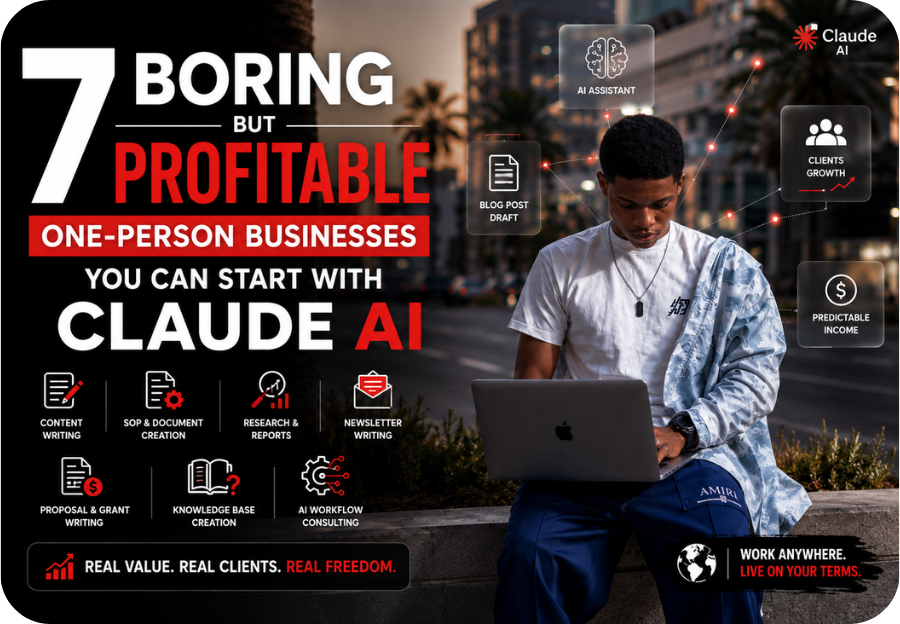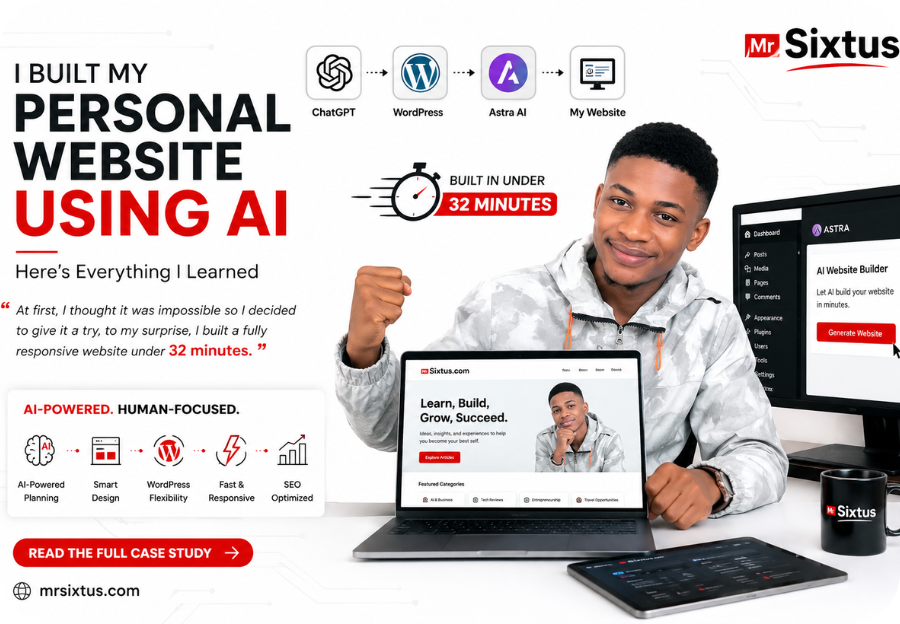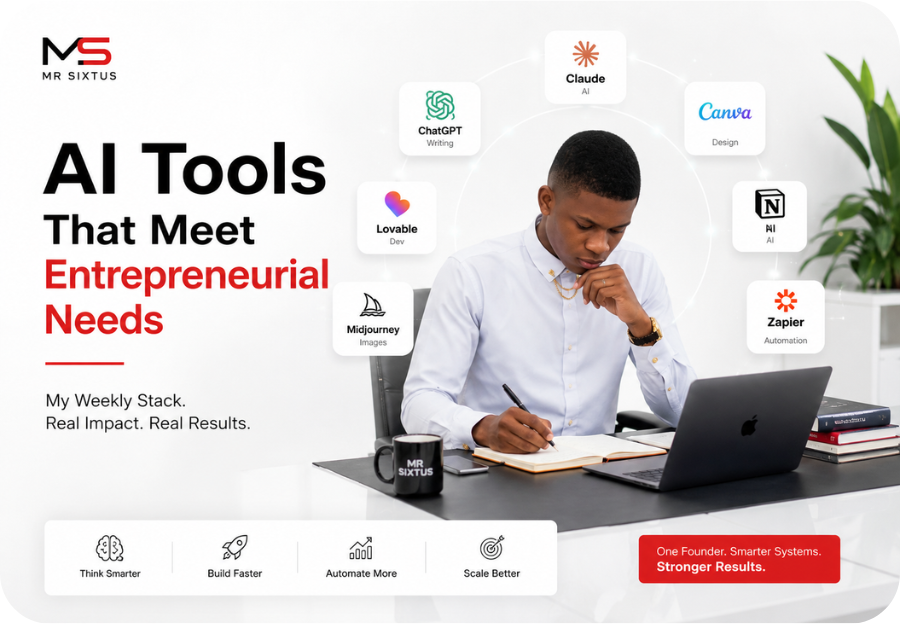
When i started the research, i notice there is a big difference between making a little money with AI and building a business around it.
When artificial intelligence first became widely accessible, many people saw it as a tool for writing faster, creating images, or answering questions. But the more interesting opportunity is what happens when i stop treating AI as a shortcut and start treating it as the engine behind a service, product, or business.
That is where AI side hustles become interesting.
And it made me to understand that a side hustle can begin with one client, one social media account, one digital product, or even a few hours of work each week. If you can solve a real problem, develop a repeatable process, and find customers willing to pay, that small project can eventually become a full time business.
I have been particularly interested in this shift because AI has dramatically reduced the cost of experimenting with business ideas. we no longer necessarily need a large team to test a concept. One person can research an opportunity, create a landing page, produce marketing content, make videos, communicate with customers, and even build an early version of a digital product with the help of AI.
But the important question, however, is not:
“What can AI do for me?”
The better question is:
“What problem can I solve with AI that people will actually pay me to solve?”
That distinction changes everything.
Why AI Side Hustles Are Different From Traditional Side Hustles
Traditional side hustles often require you to exchange time directly for money.
You work an hour, you get paid for an hour.
AI changes that equation because it can help you increase the amount of work you can accomplish without increasing your workload at the same rate.
For example, someone managing social media for a small business could use AI to help with research, content planning, first drafts, video scripts, content repurposing, and customer communication. The human still needs to provide judgment, creativity, editing, strategy, and accountability, but AI can make the production process considerably more efficient.
That creates an opportunity to build services that are easier to scale.
Recent discussions around AI-powered side businesses similarly point toward services such as consulting, content creation, social media management, digital products, research, and education.
But there is an important lesson here:
Do not build a business simply because AI makes something easy. Build one because AI makes solving a valuable problem easier.
That is the difference between an AI experiment and an AI business.
RECOMMENDED: My Entrepreneur Journey: The Late Nights, Hard Lessons, and Success Stories That Changed My Life
1. AI Video Making as a Service
One of the most promising AI side hustles is AI-assisted video production.
Video has become one of the most important forms of online content, but producing it consistently can be difficult for businesses, creators, coaches, agencies, and entrepreneurs.
They need:
- Short-form videos
- Product videos
- Social media advertisements
- Explainer videos
- Educational content
- YouTube Shorts
- TikTok-style videos
- Promotional videos
- Video presentations
- Repurposed content
The opportunity is not necessarily to create completely automated videos and send them to clients.
The better business is to combine AI video tools with human creativity and turn the process into a professional service.
For example, imagine starting with a simple offer:
“I will turn your long-form content into 10 short videos every month.”
You could help with script ideas, hooks, captions, visual concepts, editing, subtitles, thumbnails, and content repurposing.
At first, you might personally handle the work.
Eventually, you could create a production system.
Then you could hire editors.
Then you could specialize in a particular market.
For example:
AI Video Agency for Real Estate Agents
Instead of saying:
“I make AI videos.”
You could say:
“We help real estate agents turn property listings into short-form videos that generate attention on social media.”
The second offer is much easier to understand.
How this could become a full-time business
Start with:
You → 1–3 clients → repeatable service → monthly retainers → small team → specialized agency
The real asset is not the AI tool.
The asset is the client acquisition system, production workflow, brand, and customer relationships you build around it.
2. AI Content Repurposing Agency
There is an enormous amount of content being created that never reaches its full potential.
A business owner might record one podcast episode, publish one YouTube video, or write one article.
That single piece of content could potentially become:
- LinkedIn posts
- X posts
- Instagram captions
- Short videos
- Email newsletters
- Blog articles
- Carousels
- Quote graphics
- YouTube Shorts
- Content ideas
AI can help accelerate the repurposing process.
That creates another potentially strong business model.
You could offer a monthly service where clients send you one piece of long-form content and you turn it into a complete content package.
For example:
One podcast episode → 20 pieces of content.
The client does not really care that AI helped you create the first drafts.
They care that they receive useful content without having to spend hours producing it themselves.
That is an important principle for anyone starting an AI side hustle:
Sell the outcome, not the technology.
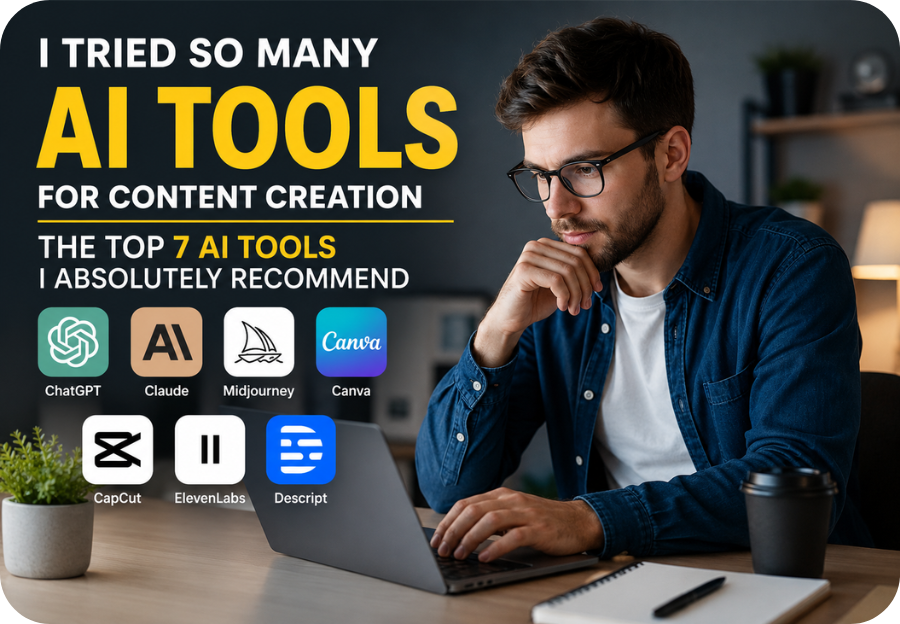
RECOMMENDED: I Tried So Many AI Tools for Content Creation – These Are the Top 7 AI Tools I Absolutely Recommend in 2026
3. AI Social Media Management
Social media management is another area where AI can improve productivity.
Small businesses often know they need to be active online but struggle to consistently produce content.
An AI-assisted social media service could combine:
- Content research
- Content calendars
- Caption creation
- Post ideas
- Short-form video concepts
- Basic graphic design
- Content repurposing
- Performance analysis
- Monthly reporting
The opportunity becomes more interesting when you specialize.
Instead of building a general social media agency, you could focus on one customer group.
For example:
- Restaurants
- Real estate agents
- Coaches
- Local businesses
- Startups
- E-commerce stores
- Personal brands
- Professional service businesses
A specialized agency can develop reusable templates, workflows, and knowledge that make each additional client easier to serve.
That is where a side hustle begins to look like a company.
4. AI SEO and Content Strategy
SEO remains an interesting business opportunity because companies constantly need useful content.
However, simply using AI to generate hundreds of generic articles is not a sustainable strategy.
Search engines and readers have little reason to value content that says the same things as hundreds of other websites.
The stronger opportunity is to use AI to accelerate research and production while adding something AI cannot simply manufacture from nothing:
real experience, original insights, expertise, data, opinions, examples, and useful information.
An AI-assisted SEO service could help businesses with:
- Keyword research
- Content planning
- Search intent analysis
- Content briefs
- Topic clusters
- Competitor research
- Internal linking
- Content optimization
- Updating outdated articles
- Content repurposing
The business becomes much more valuable when you specialize in an industry.
For example:
“SEO content for SaaS companies.”
is more specific than:
“I write articles with AI.”
The first is a business service.
The second is simply a tool capability.
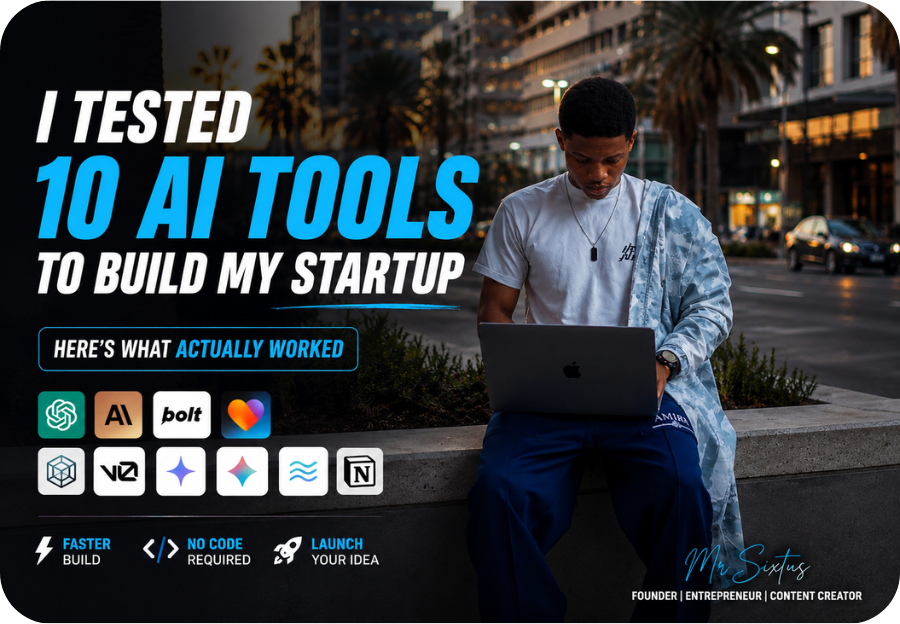
READ ALSO: I Tested 10 AI Tools to Build My Startup — Here’s What Actually Worked (And Why Lovable.dev Won)
5. AI Automation Services for Small Businesses
Many businesses have repetitive tasks that consume time every week.
This could include:
- Organizing information
- Answering common customer questions
- Creating reports
- Processing inquiries
- Drafting emails
- Managing leads
- Updating spreadsheets
- Creating documents
- Summarizing meetings
- Moving information between business systems
An AI automation specialist can help businesses identify these repetitive processes and make them more efficient.
This can become particularly valuable because the client is not really paying for AI.
They are paying for time saved.
Imagine a business owner spends several hours every week manually performing a repetitive administrative task.
If you can redesign the process so that most of the work is handled automatically while maintaining appropriate human review, you have created measurable value.
That gives you a much stronger sales argument than:
“I know how to use AI.”
Instead:
“I can help reduce the amount of manual work involved in this process.”
That is a business proposition.
6. AI-Powered Research Services
Research is another overlooked opportunity.
Businesses constantly need information.
They may need to research:
- Competitors
- Products
- Markets
- Customers
- Industry trends
- Potential partnerships
- Content opportunities
- New business ideas
AI can help organize and accelerate parts of the research process.
But again, the value should not be the raw AI output.
Your service should provide organized, verified, useful information that helps someone make a decision.
For example, instead of selling:
“AI research.”
You could sell:
“Monthly competitor intelligence reports for e-commerce brands.”
That is far more specific.
A business could receive a monthly report showing competitors’ positioning, content strategies, product launches, pricing changes, and other relevant developments.
The AI helps you produce the report efficiently.
Your business provides the structure and interpretation.
READ ALSO: Best AI Prompts for Business: My 10 Killer AI Prompts Every Entrepreneur Should Save
7. AI-Powered Digital Products
Not every AI side hustle needs clients.
One of the most attractive models is creating digital products that can be sold repeatedly.
Examples include:
- Templates
- Workbooks
- Guides
- Educational resources
- Business documents
- Prompt libraries
- Checklists
- Spreadsheet tools
- Notion systems
- Research databases
- Industry-specific resources
AI can help with brainstorming, organization, research, formatting, and initial drafts.
But the strongest products usually contain a clear point of view or useful system.
For example, instead of selling:
“100 AI prompts.”
You could create:
“The AI Content System for Real Estate Agents.”
The second product solves a specific problem for a specific customer.
That makes it easier to market.
8. AI Newsletter or Niche Media Business
Another interesting opportunity is building a niche media brand around a specific topic.
You could create a newsletter, website, YouTube channel, or social media brand focused on something such as:
- AI for entrepreneurs
- AI for small businesses
- AI tools for creators
- AI for marketers
- AI productivity
- AI business opportunities
- AI developments in a particular industry
AI can assist with research, summarization, content planning, and production.
But the differentiator should be your perspective.
The internet does not need another account that simply repeats AI-generated news.
It needs people who can answer:
“Why does this matter?”
That is where human judgment becomes valuable.
A niche media business can eventually generate revenue through advertising, sponsorships, affiliate partnerships, digital products, memberships, consulting, or other services.
READ ALSO: I Asked AI to Generate 100 Best Startup Ideas – Here Are the 17 Startup Ideas Worth Building
9. AI Training and Workshops
A lot of people have heard about AI.
Far fewer know how to apply it effectively to their particular work.
That creates an opportunity for AI education.
You could teach:
- Small business owners
- Students
- Creators
- Marketing teams
- Entrepreneurs
- Freelancers
- Professionals
The important thing is specialization.
Rather than:
“I teach people AI.”
consider:
“I teach small business owners how to use AI to save time on marketing and administration.”
Now the customer understands the benefit.
As your knowledge grows, this could develop from one-on-one sessions into workshops, courses, corporate training, templates, and eventually a larger education business.
10. AI-Powered Personal Branding Services
Personal brands are becoming increasingly important.
Founders, executives, consultants, creators, and professionals want to build an online presence but often struggle to produce content consistently.
That creates another opportunity.
An AI-assisted personal branding service could help a client turn their knowledge into content.
For example:
One 30-minute conversation with a client could become:
- Several social media posts
- Video scripts
- Newsletter ideas
- Short-form video concepts
- LinkedIn posts
- Article ideas
- Quotes
- Content hooks
AI can help with the transformation.
The human side of the business is understanding the client’s personality, expertise, story, positioning, and audience.
That human layer is what prevents the content from feeling generic.
RECOMMENDED: I Built My Personal Website Using AI: Everything I Learned After Launching MrSixtus.com
11. AI-Assisted Website and Landing Page Services
Creating a basic website is becoming easier.
But that does not mean every business owner wants to build one themselves.
Many still need someone who understands:
- Positioning
- Copywriting
- User experience
- Conversion
- SEO
- Branding
- Structure
AI can accelerate parts of the development process.
You could offer a focused service such as:
“I build conversion-focused websites for local businesses within seven days.”
The AI helps you research, write, prototype, design, and develop.
You provide the strategy and final quality control.
Once you establish a repeatable workflow, you can potentially serve more customers without increasing your workload proportionally.
12. AI Customer Support Setup
Customer service is another area where businesses are looking for efficiency.
A small company may receive the same questions repeatedly.
An AI-assisted customer support system could help organize knowledge, draft responses, categorize inquiries, and direct customers toward appropriate information.
However, this needs to be implemented responsibly.
Sensitive or complicated issues should still receive appropriate human attention.
The opportunity is therefore not:
“Replace your customer service team.”
It is:
“Help your team handle repetitive questions more efficiently.”
That distinction can make the service both more practical and more trustworthy.
The AI Side Hustles With the Best Chance of Becoming Businesses
Not every AI side hustle has equal potential.
I would evaluate an idea using five questions:
| Question | Why It Matters |
|---|---|
| Does it solve a real problem? | People pay for solutions |
| Can customers pay repeatedly? | Recurring revenue is powerful |
| Can the process be standardized? | Systems make scaling easier |
| Can you specialize? | Niches reduce competition |
| Can AI improve your margins? | Efficiency increases potential profit |
Based on those criteria, I would pay particular attention to:
- AI video production
- AI content repurposing
- AI social media services
- AI automation
- AI SEO services
- AI research services
- AI training
- AI digital products
The important point is that you do not have to start with a huge business idea.
You can start with a service.
From Side Hustle to Full-Time Business: The 5-Stage Path
One mistake people make is trying to build a company before proving that anyone wants what they are selling.
A better approach is to progress through stages.
Stage 1: Find a Problem
Start with a problem rather than an AI tool.
Do not ask:
“What can I do with ChatGPT?”
Ask:
“What frustrating task do businesses or creators repeatedly struggle with?”
That question can lead you toward much better opportunities.
Stage 2: Sell the Service Manually
Find your first customer.
Do the work yourself.
Learn what customers actually want.
Do not worry about automation yet.
Your first objective is validation.
Stage 3: Create a Repeatable System
Once you have completed the service several times, document the process.
Create:
- Templates
- Checklists
- Prompts
- Workflows
- Standard operating procedures
- Quality-control systems
Now you have something that can be repeated.
Stage 4: Increase Your Capacity
This is where AI becomes particularly powerful.
If a process previously required five hours, perhaps better tools and workflows can reduce the amount of manual work required.
You can then serve more customers without simply working longer hours.
Eventually, you may outsource parts of the process to other people.
Stage 5: Build the Company
Once the business has customers, predictable revenue, and a repeatable process, you can begin thinking beyond the side hustle.
That could mean:
- Hiring employees
- Building software
- Creating a subscription
- Launching digital products
- Expanding into new markets
- Developing a recognizable brand
At that point, you are no longer simply using AI to make extra money.
You are building a company that happens to use AI.
The Biggest Mistake to Avoid With AI Side Hustles
The biggest mistake is chasing tools instead of customers.
AI tools change extremely quickly.
A tool that looks revolutionary today may be replaced by something better tomorrow.
If your entire business depends on one particular tool, that can become a problem.
Instead, build around the underlying customer problem.
For example:
Weak business model:
“I make videos using Tool X.”
Stronger business model:
“I help businesses create short-form video content consistently.”
The second business can survive even if Tool X disappears.
You simply change the technology behind the service.
That is how entrepreneurs should think about AI.
AI is the infrastructure. The customer problem is the business.
You Do Not Need to Be an AI Expert
Another misconception is that you need to understand artificial intelligence at an advanced technical level before starting.
For many AI side hustles, you do not.
You need to understand the customer’s problem, learn the relevant tools, and become good at producing the desired result.
Someone who understands marketing and learns how to use AI effectively can potentially create a stronger business than someone who understands AI technology but does not understand customers.
The most valuable combination is often:
Domain knowledge + AI + distribution.
That combination is difficult to replace.
What I Would Do If I Were Starting Today
If I were starting from zero, I would not launch ten AI side hustles simultaneously.
I would choose one market.
Then I would find one expensive or frustrating problem.
Then I would build one simple offer around solving it.
For example:
Market: Real estate agents
Problem: They struggle to create consistent social media content.
Offer: 20 short-form videos per month.
AI advantage: Faster scripting, content planning, editing assistance, repurposing and production.
Business model: Monthly subscription.
The first objective would not be to create a website, logo, complicated software platform, or massive social media following.
The first objective would be finding someone willing to pay.
Once customers start paying, everything becomes easier to understand.
You learn what they value.
You discover what they do not care about.
You learn how much they are willing to pay.
You identify repetitive tasks.
And eventually, you can turn that knowledge into a system.
The Future of AI Side Hustles Is Not Just About AI
There is a strange irony in the AI business opportunity.
The more powerful AI becomes, the less impressive it will be to simply say:
“I use AI.”
Everyone will use it.
The competitive advantage will increasingly come from what you build around the technology.
Your niche.
Your expertise.
Your audience.
Your reputation.
Your distribution.
Your customer relationships.
Your systems.
Your ability to understand problems.
And your ability to turn those problems into products and services people actually want.
That is why I believe the most interesting AI side hustles are not necessarily the ones that promise quick money.
They are the ones that can evolve.
A simple AI video service can become an agency.
An SEO side hustle can become a media company.
An automation service can become a software business.
A digital product can become an education company.
A newsletter can become a media brand.
A freelance service can become a specialized agency.
The side hustle is simply the starting point.
Final Thoughts
AI has lowered the barrier to experimenting with business ideas.
You can research faster, create faster, prototype faster, produce content faster, and automate parts of your workflow that previously required significant time or money.
But AI does not automatically create a business.
Customers create businesses.
If you can identify a problem, create a valuable solution, find people who need it, and build a repeatable way of delivering that solution, you have the foundation of a real company.
So instead of asking:
“What is the easiest AI side hustle I can start?”
try asking:
“What AI-powered service could I start small and eventually turn into a company?”
That is a much more powerful question.
And if I were choosing where to experiment first, AI video making, content repurposing, automation, specialized SEO, and AI-powered business services would be among the areas I would investigate most closely.
The goal should not simply be to make your first $100 with AI.
The bigger opportunity is to discover something that could eventually be worth much more than that.