Everyone keeps saying that artificial intelligence is replacing jobs.
But I started wondering something different.
What if AI could become my team instead of my competition?
That simple question led me down a rabbit hole. Instead of asking whether AI would replace marketers, designers, copywriters, developers, and project managers, I wanted to know if these tools could work together like a real agency.
So I challenged myself.
Could I build an AI marketing agency without hiring employees, renting an office, or spending thousands of dollars on software?
More importantly, could I create a workflow that a freelancer, creator, or entrepreneur could realistically use?
This wasn’t about becoming an overnight millionaire or chasing another “make money online” trend. It was an experiment to see how far modern AI tools have come and whether they could genuinely help someone launch a lean marketing business.
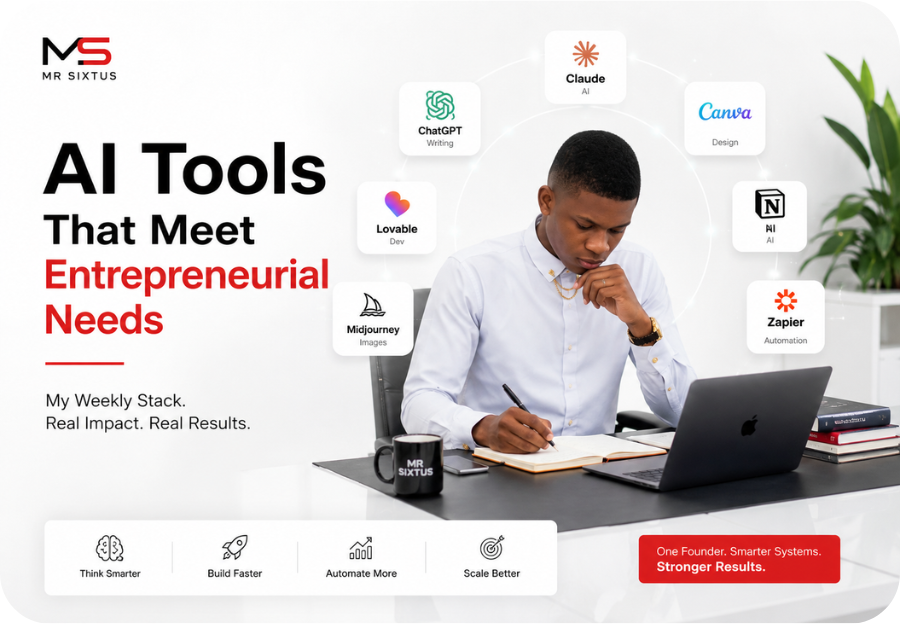
After researching different tools, I settled on three that complement each other remarkably well:
- ChatGPT as the strategist and creative marketing assistant.
- Claude AI as the long-form writer, editor, and research partner.
- Lovable Dev as the web application and landing page builder.
Each tool has strengths that cover the weaknesses of the others. Together, they can handle a surprising amount of work that would normally require a small agency.
In this guide, I’ll walk you through the exact workflow I created, the prompts I used, the tasks I assigned to each AI, and the lessons I learned along the way.
If you’ve been searching for a practical way to build an AI marketing agency, this guide will show you how to get started without spending a fortune.
Why I Decided to Run This Experiment
Over the last two years, I’ve seen hundreds of videos claiming you can make thousands of dollars every month using AI.
Most of them follow the same pattern.
They show polished dashboards, impressive revenue screenshots, and promises that everything can be automated with a few clicks.
But the problem?
Very few explain what actually happens between signing a client and delivering high-quality work.
That’s where I wanted to dig deeper.
Instead of focusing on income claims, I wanted to understand the operational side of an AI-powered agency.
Could AI help with:
- Finding service ideas?
- Creating proposals?
- Writing blog articles?
- Designing landing pages?
- Building websites?
- Creating social media content?
- Managing projects?
- Responding to client feedback?
If the answer was yes, then AI wasn’t replacing people.
It was replacing repetitive tasks.
That distinction changes everything.
The Goal
The goal wasn’t to build the biggest marketing agency.
It was to build the smartest one.
I wanted a workflow where every repetitive task had an AI responsible for it, allowing me to focus on strategy, decision-making, and client relationships.
Think of it like assembling a remote team.
Except every team member happens to be powered by artificial intelligence.
Meet My AI Marketing Team
Every successful agency has specialists.
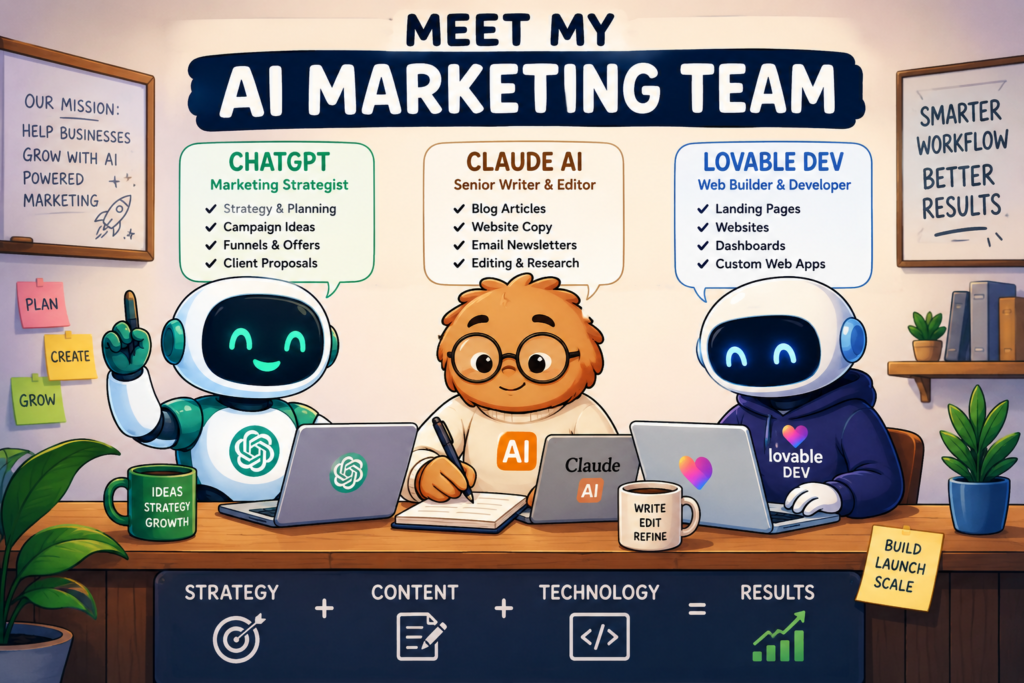
Instead of hiring employees, I assigned each responsibility to an AI tool that performs particularly well in that area.
Here’s how my AI team was structured.
ChatGPT — The Marketing Strategist
If this agency had a creative director, ChatGPT would fill that role.
It excels at brainstorming, campaign planning, marketing strategy, customer research, and creating structured workflows.
Some of the tasks I assigned to ChatGPT included:
- Marketing strategy
- Sales funnels
- SEO planning
- Client proposals
- Email sequences
- Brand messaging
- Content calendars
- Offer positioning
- Lead magnets
Whenever I needed ideas quickly or wanted to organize a complex project, ChatGPT became my first stop.
Claude AI — The Senior Writer and Editor
Writing is one of the biggest services most agencies provide.
Whether it’s blog articles, newsletters, landing page copy, case studies, or white papers, quality writing still matters.
This is where Claude AI became incredibly useful.
Its strength isn’t simply generating text.
It’s producing writing that feels organized, natural, and easier to edit.
I relied on Claude AI for:
- Long-form blog articles
- Website copy
- Email newsletters
- Case studies
- SOP documentation
- Research summaries
- Editing drafts
- Improving readability
Instead of asking Claude to replace my thinking, I used it to strengthen my ideas.
Lovable Dev — The Web Builder
Every marketing agency eventually needs websites.
Landing pages.
Client dashboards.
Lead capture forms.
Internal tools.
That’s why Lovable Dev became the developer on my AI team.
Rather than writing hundreds of lines of code manually, I could describe what I wanted in plain English and generate a working web application much faster than starting from scratch.
Examples included:
- Landing pages
- Portfolio websites
- CRM dashboards
- Lead management tools
- Appointment booking systems
- Internal agency dashboards
For entrepreneurs who don’t have a software engineering background, this dramatically lowers the barrier to building professional digital products.
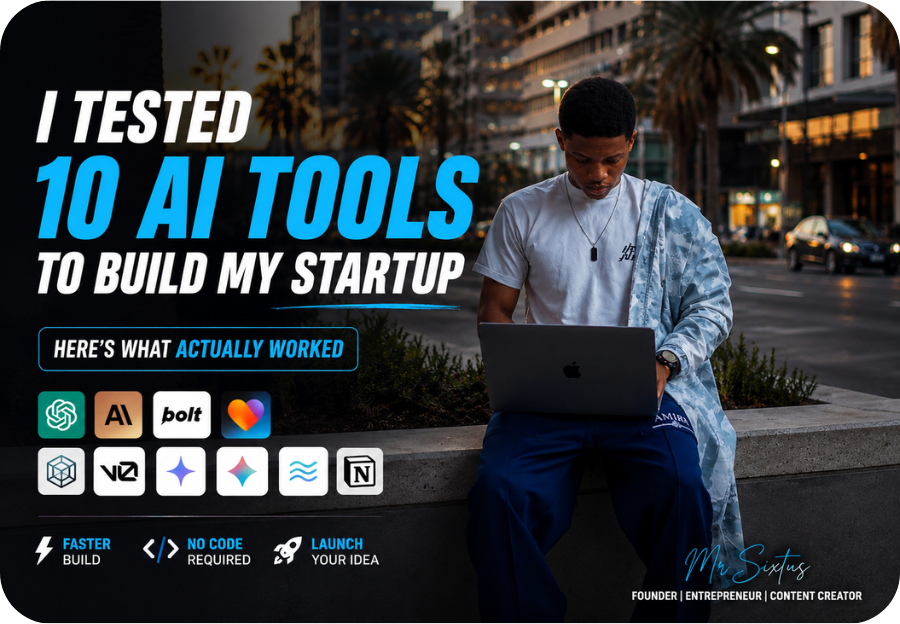
RECOMMENDED: I Tested 10 AI Tools to Build My Startup — Here’s What Actually Worked (And Why Lovable.dev Won)
Why These Three AI Tools Work So Well Together
One thing became obvious during this experiment.
No single AI does everything perfectly.
Each has strengths and limitations.
Instead of forcing one tool to do every job, I treated them like specialists.
The workflow looked like this:
ChatGPT
→ Plans the strategy
↓
Claude AI
→ Produces polished content
↓
Lovable Dev
→ Turns ideas into functional websites and applications
That division of responsibilities made the entire process faster and more consistent.
Instead of bouncing randomly between tools, every task had a clear owner.
Building the AI Marketing Agency with ChatGPT, Claude AI & Lovable Dev
Step 1: Defining My Agency’s Niche
One of the biggest mistakes new agencies make is trying to serve everyone.
Instead of becoming another “digital marketing agency,” I wanted to solve a specific problem for a specific audience.
I chose to focus on small SaaS startups and eCommerce businesses because they constantly need:
- SEO content
- Landing pages
- Email campaigns
- Social media content
- Website improvements
- Marketing automation
A focused niche makes everything easier, from writing proposals to creating repeatable workflows.
Step 2: Hiring My First AI Employee (ChatGPT)
The first “employee” I hired was ChatGPT.
Instead of asking random questions, I gave it a permanent role.
My prompt looked something like this:
You are the Chief Marketing Strategist for my AI marketing agency. Your job is to think like a senior CMO with experience in SEO, content marketing, branding, lead generation, conversion optimization, and growth marketing. Every recommendation should prioritize measurable business results.
Immediately, ChatGPT stopped behaving like a chatbot.
It started acting more like a senior strategist.
Whenever a client approached me, I asked ChatGPT questions like:
- Who is their ideal customer?
- What keywords should we target?
- What marketing channels make the most sense?
- What content strategy should we follow?
- What should be our first 90-day plan?
Within minutes, I had strategic recommendations that would normally require hours of research.
Step 3: Letting Claude Become My Senior Writer
ChatGPT is excellent at brainstorming and planning.
But when it comes to writing long-form content, Claude has a unique advantage.
Its responses often feel calmer, more natural, and more structured.
So I assigned Claude the role of Senior Content Writer.
Its responsibilities included:
- Blog articles
- Landing pages
- Product descriptions
- Case studies
- White papers
- Email newsletters
- Lead magnets
A typical prompt looked like this:
You are an award-winning SEO copywriter. Write an article that sounds like a professional human writer. Avoid robotic phrases, write naturally, use storytelling where appropriate, and optimize for search engines without keyword stuffing.
Claude consistently produced content that required only light editing before publication.
That dramatically reduced the time spent writing.
Step 4: Using ChatGPT as My SEO Specialist
Every blog article followed the same workflow.
First, ChatGPT generated:
- Keyword research
- Search intent analysis
- Semantic keywords
- Competitor analysis
- Internal linking ideas
- FAQ suggestions
For example, if the topic was AI marketing automation, ChatGPT could generate:
Primary keyword:
- AI marketing agency
Secondary keywords:
- AI marketing workflow
- ChatGPT for business
- Claude AI marketing
- AI automation tools
- AI content creation
It even suggested article outlines based on Google’s current search intent.
That saved hours of manual SEO planning.
Step 5: Claude Turned the Outline into High-Quality Content
Instead of asking Claude to write an article from scratch, I gave it everything ChatGPT had already prepared.
That included:
- Target keyword
- Audience
- Search intent
- Competitor insights
- Desired tone
- Article outline
This dramatically improved the final output.
The result wasn’t just longer content.
It was more relevant, better structured, and easier to read.
Step 6: Building the Agency Website with Lovable Dev
Every agency needs a professional online presence.
Instead of hiring a web developer, I decided to test Lovable Dev.
Rather than writing code manually, I described exactly what I wanted.
For example:
Build a modern marketing agency website with a clean homepage, services page, pricing page, blog, testimonials, contact form, responsive navigation, SEO optimization, and fast loading speed.
Within a short time, I had the foundation of a professional website.
Then I refined individual sections with more detailed prompts.
For example:
Improve the hero section so it focuses on business growth instead of technology.
Or:
Rewrite the service page using persuasive copy that increases conversions.
Instead of coding everything myself, I became the creative director while Lovable handled much of the implementation.
Step 7: Designing My Service Packages
I wanted my offers to be simple.
Instead of selling “marketing,” I sold clear outcomes.
For example:
Starter Growth Package
- Four SEO blog posts
- One landing page
- Basic keyword research
- Monthly content calendar
Growth Package
- Eight blog articles
- Email campaign
- Social media content
- SEO optimization
- Analytics report
Premium Growth Package
- Complete content strategy
- Weekly blog publishing
- Website optimization
- AI marketing automation
- Monthly strategy calls
These packages made pricing straightforward and helped clients understand exactly what they would receive.
Step 8: Creating Standard Operating Procedures (SOPs)
A real agency needs systems.
So I documented every workflow.
For example:
Content Workflow
Client Brief → ChatGPT Strategy → Claude Writing → Human Editing → SEO Review → Publishing
Every project followed the same process.
This consistency made it much easier to deliver reliable results.
Step 9: Building Reusable Prompt Templates
One of the biggest productivity gains came from creating reusable prompts.
Instead of starting from scratch every time, I built templates for common tasks.
Some examples included:
- SEO keyword research
- Blog article generation
- Landing page copy
- Email sequences
- Sales proposals
- Client onboarding
- Competitor analysis
- Marketing strategies
Over time, this became a growing library that made future projects faster and more consistent.
The Biggest Surprise
What surprised me most wasn’t how good the AI tools were individually.
It was how powerful they became when working together.
ChatGPT handled strategy.
Claude transformed strategy into polished content.
Lovable Dev turned ideas into functional web experiences.
Instead of replacing one another, each tool complemented the others, creating a workflow that felt surprisingly close to having a small agency team.
RELATED: 7 Boring But Profitable One-Person Businesses You Can Start With Claude AI
Finding Clients, Delivering Services, Automating Operations, Pricing, and Scaling
Building an agency is only half the challenge.
The other half is convincing people to pay for your work.
Even with AI handling much of the production, you still need clients, trust, and a reliable system for delivering results.
Here’s the workflow I designed.
Step 10: Creating an Irresistible Offer
Most agencies sell services.
Successful agencies sell outcomes.
There’s a big difference.
Instead of saying:
We provide SEO.
I positioned the offer as:
We help SaaS companies increase organic traffic with AI-assisted content marketing.
That shift immediately made the value clearer.
Clients care far more about results than the tools you use.
Step 11: Finding My First Clients
Rather than waiting for inquiries, I created a simple outreach process.
Potential channels included:
- X (formerly Twitter)
- Cold email
- Founder communities
- Facebook groups
- Startup directories
- Personal referrals
For each prospect, I used ChatGPT to research the business and identify opportunities for improvement.
Then I crafted personalized outreach messages based on those insights.
The key wasn’t sending hundreds of generic emails.
It was sending fewer, higher-quality messages that demonstrated genuine understanding of each business.
Step 12: Automating Client Discovery
To make lead generation more efficient, I used AI to streamline research tasks.
ChatGPT helped identify:
- Businesses with outdated websites
- Companies publishing inconsistent blog content
- Sites missing obvious SEO opportunities
- Weak landing pages
- Poor calls to action
Instead of spending hours manually reviewing websites, AI accelerated the process and helped prioritize promising leads.
Step 13: Onboarding Clients Faster
Once a client showed interest, I avoided long back-and-forth email chains.
I used a standardized onboarding workflow that collected:
- Business goals
- Target audience
- Brand voice
- Existing website
- Competitors
- Preferred marketing channels
- Success metrics
ChatGPT then summarized this information into a concise strategy brief that guided the rest of the project.
This reduced misunderstandings and ensured everyone started with the same expectations.
Step 14: Delivering Work Efficiently
Every client project followed a repeatable sequence:
- Discovery and onboarding
- Strategy created with ChatGPT
- Content drafted with Claude
- Website or landing page updates with Lovable Dev (when applicable)
- Human review and quality assurance
- Client feedback and revisions
- Final delivery
Although AI handled much of the heavy lifting, I treated every deliverable as something that required human judgment before it reached the client.
That final review was essential for maintaining quality and trust.
Step 15: Pricing the Agency
Pricing AI-powered services can be challenging because clients aren’t paying for prompts—they’re paying for outcomes.
A practical approach is value-based pricing rather than charging based on how long AI took to generate the work.
For example:
- SEO Content Package: Fixed monthly retainer
- Landing Page Project: Fixed project fee
- Marketing Strategy: One-time consulting fee
- Ongoing Content Marketing: Monthly subscription
This makes pricing predictable for both the agency and the client while emphasizing business value instead of production time.
Step 16: Automating Internal Operations
Beyond client work, AI also streamlined day-to-day operations.
ChatGPT helped generate:
- Meeting summaries
- Proposal drafts
- Follow-up emails
- Monthly performance reports
- Client FAQs
- Internal documentation
These repetitive tasks often consume hours each week. Automating the first draft freed up more time for strategic work and client relationships.
Step 17: Scaling Without Hiring Immediately
One of the most interesting aspects of this workflow was its ability to scale before building a large team.
As the number of clients grew, the process remained largely the same:
- Refine prompt libraries
- Improve SOPs
- Reuse successful templates
- Add specialized AI tools where needed
- Bring in human specialists only when the workload justified it
This creates a business that can grow methodically rather than expanding headcount prematurely.
What I Learned About AI Agencies
The biggest lesson wasn’t that AI replaces marketers.
It doesn’t.
Instead, AI shifts the role of the agency owner.
Instead of spending every hour writing blog posts, designing pages, or drafting emails, you spend more time:
- Understanding clients
- Developing strategies
- Reviewing quality
- Making creative decisions
- Building relationships
- Growing the business
The technology becomes a force multiplier, not a substitute for expertise.
In the end, the most successful AI marketing agencies are unlikely to be those with the most tools. They’ll be the ones with the clearest systems, the strongest understanding of their clients, and the discipline to combine AI efficiency with human insight.
RECOMMENDED: How to Get Hostinger 90% Off in 2026 (Step-by-Step Guide + Free Domain)
Mistakes I Made While Building an AI Marketing Agency
Every experiment has its setbacks, and this one was no different. While AI significantly accelerated the workflow, I quickly realized that simply combining powerful tools doesn’t automatically create a successful business. The real challenge lies in how you use them together.
Here are some of the biggest lessons I learned.
1: Expecting AI to Do Everything
When I started, I assumed AI could handle almost every task from strategy to client communication with minimal human involvement.
It didn’t take long to realize that this expectation was unrealistic.
AI is excellent at generating ideas, writing first drafts, summarizing information, and speeding up repetitive work. However, it still lacks the business intuition, emotional intelligence, and industry experience needed to make important decisions.
Clients don’t pay for AI-generated content.
They pay for expertise, judgment, and results.
The biggest value I added wasn’t typing prompts, it was knowing which ideas to use, which ones to reject, and how to align every recommendation with the client’s goals.
2: Using Generic Prompts
At first, my prompts were vague.
I would ask things like:
“Write an SEO article about AI.”
The results were equally generic.
After experimenting, I learned that AI performs dramatically better when given detailed context.
Instead of a single sentence, I started providing:
- Target audience
- Search intent
- Brand voice
- Desired article length
- Competitor insights
- Primary keyword
- Secondary keywords
- Internal linking opportunities
- Call-to-action
The difference in quality was remarkable.
The more context I provided, the better the output became.
3: Publishing Without Editing
One of the easiest traps to fall into is assuming AI-generated content is ready to publish.
It rarely is.
Even when the writing is strong, there may be factual inaccuracies, repetitive wording, awkward transitions, or examples that don’t fit the audience.
Every article still benefited from a careful human review.
Editing wasn’t about correcting AI.
It was about improving clarity, accuracy, and originality.
4: Ignoring Brand Voice
Different businesses communicate differently.
A fintech startup doesn’t sound like a travel blog.
A law firm doesn’t sound like an eCommerce brand.
Initially, I generated content without clearly defining the client’s tone.
The articles were technically correct but lacked personality.
Once I started creating brand voice guides for each client, the content became much more consistent and recognizable.
5: Forgetting That Clients Want Results
Most clients don’t care whether you used ChatGPT, Claude, or any other AI tool.
They care about outcomes.
Can you increase website traffic?
Can you improve conversions?
Can you generate more qualified leads?
Can you help them grow revenue?
The technology matters far less than the business impact.
The Biggest Lessons From This Experiment
Looking back, several key lessons stand out.
AI Is an Assistant, Not a Replacement
The most effective workflow combined AI efficiency with human expertise.
AI accelerated research, writing, and planning.
Humans provided creativity, judgment, and strategic thinking.
Together, they formed a much stronger system than either could achieve alone.
Systems Beat Talent
One surprising discovery was that a well-documented workflow consistently outperformed relying on inspiration.
Having repeatable systems for research, writing, editing, onboarding, and delivery made the agency more efficient and easier to scale.
Good systems reduce mistakes and improve consistency.
Prompt Libraries Are Valuable Assets
Over time, I built a collection of reusable prompts for tasks like:
- SEO research
- Content briefs
- Sales proposals
- Email campaigns
- Client onboarding
- Landing page copy
- Marketing strategies
These prompt libraries became one of the agency’s most valuable internal resources because they saved time while maintaining quality.
AI Gives Solo Entrepreneurs a Competitive Advantage
Perhaps the biggest realization was that one person can now accomplish work that previously required a small team.
That doesn’t mean AI replaces specialists.
It means entrepreneurs can validate ideas, serve early clients, and grow more efficiently before expanding their teams.
SEE ALSO: My Entrepreneur Journey: The Late Nights, Hard Lessons, and Success Stories That Changed My Life
LASTLY
When I began this experiment, I wanted to answer a simple question:
Could one person build an effective marketing agency using modern AI tools?
After testing the workflow from strategy to content creation, website development, client operations, and automation, my conclusion is clear.
The technology is already capable of handling a significant portion of the repetitive work that once consumed agencies.
What AI cannot replace is strategic thinking, creativity, relationship building, and accountability.
The entrepreneurs who succeed won’t necessarily be those using the most AI tools.
They’ll be the ones who understand business problems, build efficient systems, and use AI to amplify their expertise rather than replace it.
If you’re considering launching an AI-powered marketing agency, don’t wait until everything is perfect.
Start with one niche.
Build one repeatable workflow.
Serve one client exceptionally well.
Refine your process.
Then repeat.
The future of entrepreneurship isn’t about competing against artificial intelligence.
It’s about learning how to collaborate with it.
Frequently Asked Questions
Can you really build an AI marketing agency with ChatGPT, Claude AI, and Lovable Dev?
Yes. These tools can help with strategy, content creation, website development, and workflow automation. However, success still depends on your ability to understand client needs, review outputs, and deliver measurable business value.
Is coding experience required?
No.
Modern AI development tools have made it much easier for non-developers to build websites, landing pages, and simple applications using natural language prompts.
That said, having a basic understanding of web technologies can still be helpful when customizing or troubleshooting projects.
Is AI-generated content good for SEO?
It can be.
Search engines generally evaluate content based on its usefulness, originality, and relevance rather than whether AI assisted in creating it.
Content should always be fact-checked, edited, and written with users—not algorithms—as the primary focus.
Which AI tool performed best?
Each tool had different strengths.
- ChatGPT excelled at strategy, brainstorming, SEO planning, and marketing ideas.
- Claude AI produced polished long-form writing with a natural flow.
- Lovable Dev simplified website creation and rapid prototyping.
Using them together created a more effective workflow than relying on a single tool.
Can one person realistically run an AI marketing agency?
Yes, especially in the early stages.
With efficient systems and AI support, a solo founder can manage research, content creation, client communication, and project delivery.
As the client base grows, bringing in human specialists can help maintain quality and expand capacity.